
Galleria dell'Accademia Venice
Galleria dell'Accademia Venice
Galleria dell'Accademia di Venezia
Gallerie dell'Accademia Venice
We would have loved to visit this museum for you… but unfortunately, we weren’t given permission to take photos.
Therefore, this is more about the history and theoretical knowledge 😉

My Rating:
Note:
We haven't been there yet. We'll visit as soon as we have the chance.
Last Modified: 23.04.2026 | Céline
Gallerie dell'Accademia Venice
Ticket
Guided Tour
EUR 170Private guided tour of the Accademia and Dorsoduro, duration: 2 hours, languages: EN/IT/DE/ES/FR
Book Tour
The details
at a glance


What is there
to see?
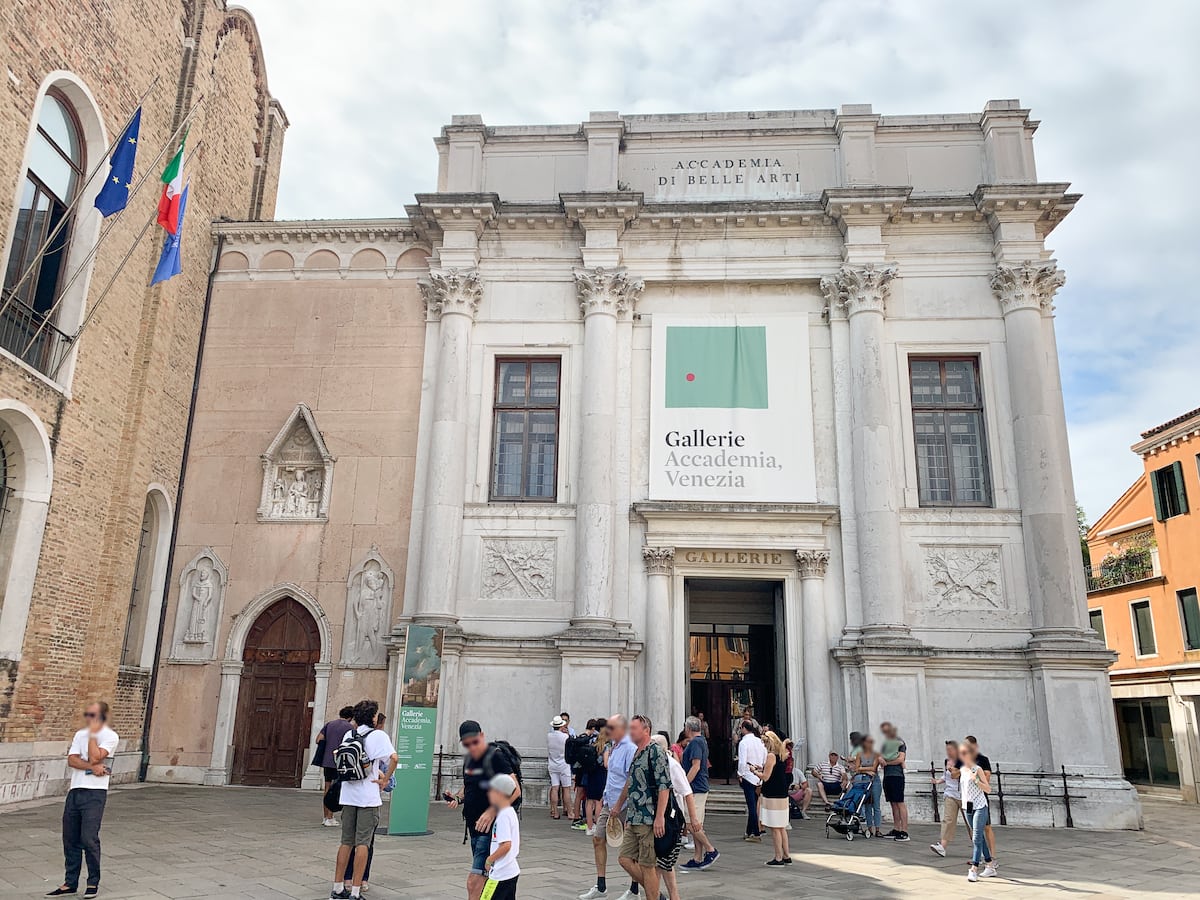
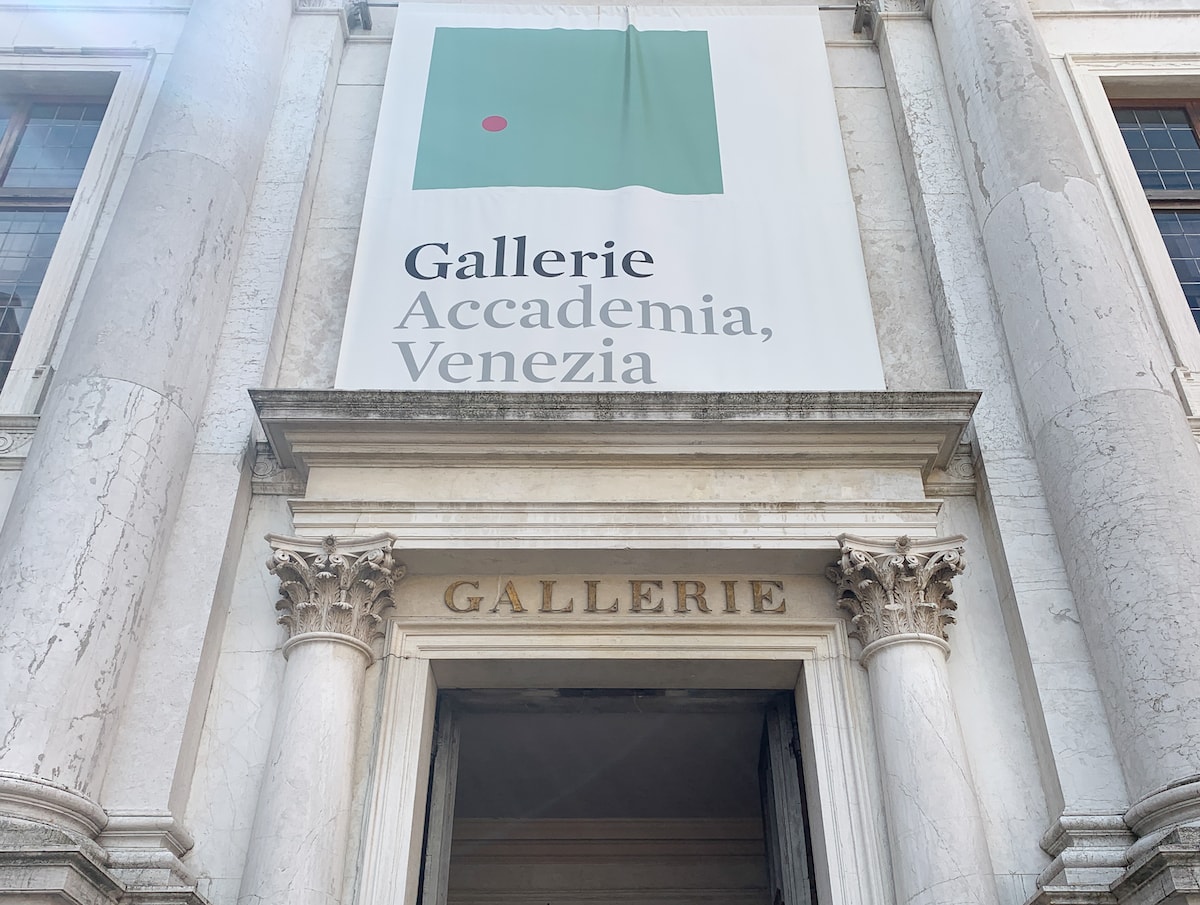
The Gallerie dell’Accademia in Venice houses the world’s largest collection of Venetian paintings. Today, the museum is located within the former monastery complex of Santa Maria della Carità.
The museum consists of 37 rooms—13 on the ground floor and 24 on the upper level. It’s an impressive space, and one that truly requires time to explore. According to the museum itself, visitors embark on a unique journey through Venetian art from the 14th to the 18th century.
And indeed, the collection features some major names. Many of these renowned artists were born in Venice. Alongside Florence and Rome, Venice was one of the great artistic centres of the Renaissance.
Among the artists represented are Giovanni Bellini (Venice), Titian (from the Veneto region), Jacopo Tintoretto (Venice), Lorenzo Lotto (Venice), Veronese (died in Venice), Andrea Mantegna (visited Venice), Annibale Carracci (visited Venice), and Antonio Canova (died in Venice).
And of course, Antonio Canal, known as Canaletto—born in Venice—cannot be missed, famous above all for his iconic views of the city.
The collection includes many more artists, but those you’ll have to discover for yourselves.
Gallerie dell’Accademia
A bit of History
The Gallerie dell’Accademia di Venezia dates back to 24 September 1750. It was founded by the Senate of the Serenissima (the Republic of Venice) and originally consisted of 36 professors teaching art and architecture. The Accademia was also responsible for the restoration of public artworks. In 1819, a dedicated school for restoring damaged paintings was finally established.
Earlier, in 1807, the Veneta Accademia di Pittura, Scultura e Architettura (Venetian Academy of Painting, Sculpture and Architecture) had been transformed into the Accademia Reale di Belle Arti (Royal Academy of Fine Arts). In the same year, the academy moved into the Santa Maria della Carità complex.
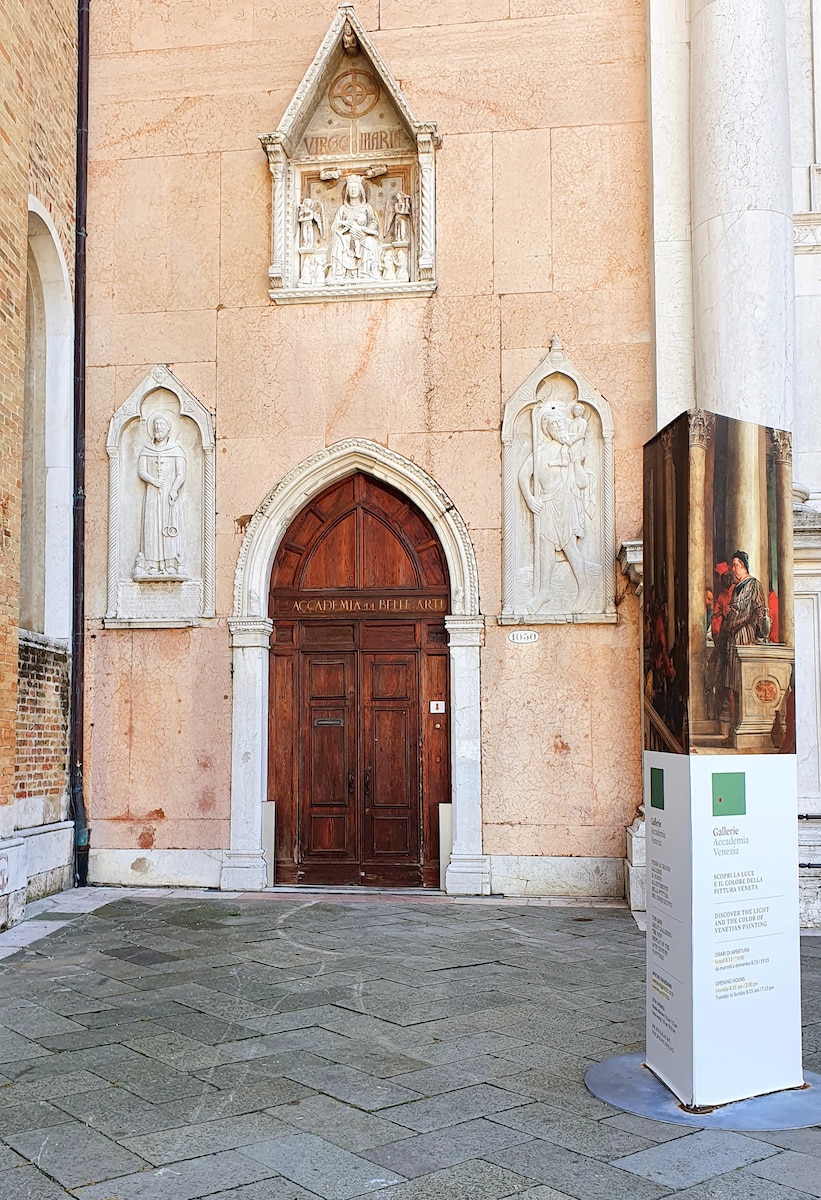
This complex includes the church, its adjoining monastery, and the Scuola Grande. The earliest buildings date back to the early 12th century, with the church having undergone several renovations and transformations over the centuries.
From 1798 onwards, many masterpieces originally housed in monasteries and churches across the Veneto region were entrusted to the Accademia.
After the fall of the Republic of Venice, the Santa Maria della Carità complex passed into state ownership. In 1807, under a decree issued by Napoleon, it officially became the seat of the Accademia di Belle Arti and its gallery.
Following Napoleon’s defeat, more artworks returned to Venice and were given to the Accademia. This prompted the institution to organise an exhibition on 10 August 1817. The Gallerie dell’Accademia continued to grow through additional donations and became fully independent from the Academy of Fine Arts in 1879.
More than 250 years after moving into the church complex, the art academy eventually relocated again—this time to the newly restored Ospedale degli Incurabili, just a nine-minute walk away—and the entire former complex became dedicated solely to the Gallerie dell’Accademia.
Today, the Accademia di Belle Arti di Venezia remains a higher education institution dedicated to training in the visual arts.
Since 2015, the museum itself has enjoyed special autonomy—meaning organisational, financial and academic independence from the academy. It now falls under the General Directorate of the Italian Ministry of Cultural Heritage, Activities and Tourism (MiBAC).
Important: Don’t confuse it with the identically named Galleria dell’Accademia in Florence.
Official website of the Accademia (IT/EN/FRZ): www.gallerieaccademia.it/en
Text and image rights: © Céline Mülich, 2023–2026
Other
art museums in Venice

Peggy Guggenheim Collection
find out more
Ca Pesaro
find out more
Pinault Collection - Punta Dogana
find out more