
museo correr
museo correr
City Museum of Venice
Museo Correr
A magnificent museum of Venetian artworks and antiquities, some of which date back to the 13th century.

My Rating:
Note:
We haven't been there yet. But the museum is on our to-do list!
Last Modified: 23.04.2026 | Céline
Museum Correr
Tickets
Note
On the official Museo Correr website, it is possible to obtain free entry tickets. The information is presented in a mix of English and Italian. It appears that a ticket is required to visit the museum, although we cannot confirm whether tickets are available on site, as we have not yet visited.
The museum is included with the Doge’s Palace ticket. So if you have already purchased one of those, you can also enter the Museo Correr.
The details
at a glance


Prices
The official website shows tickets for EUR 0, but this isn’t explicitly stated anywhere.
Only the combination with the Doge’s Palace is advertised…
show less

Guided Tours
Guided tours in English, Italian, and French.
EUR 15 for adults
EUR 12 for children


Museum Correr
Photo Gallery
What is there
to see?
The museum presents the art and history of Venice through paintings, drawings, and sculptures, covering everything from everyday life to maritime ventures and city festivals.
The Pinacoteca on the second floor houses masterpieces of Venetian art dating back to the 16th century, alongside works by Flemish and German artists.
There is also an extensive collection by Antonio Canova. Though not born in Venice, he spent considerable time in the city and created key works such as Eurydice and Orpheus, which are displayed at Museo Correr. Canova’s works are also well represented in the Accademia.
Museum Correr
A bit of History
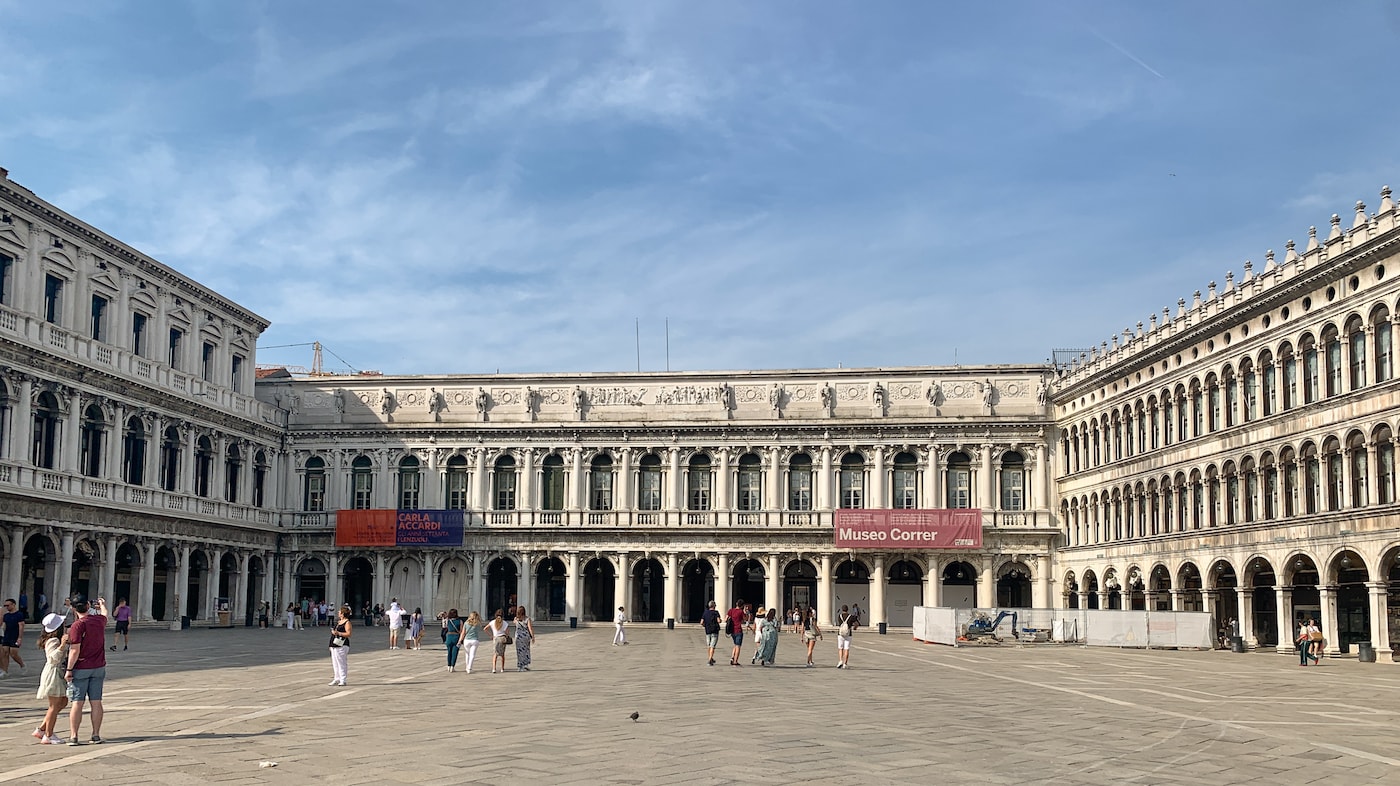
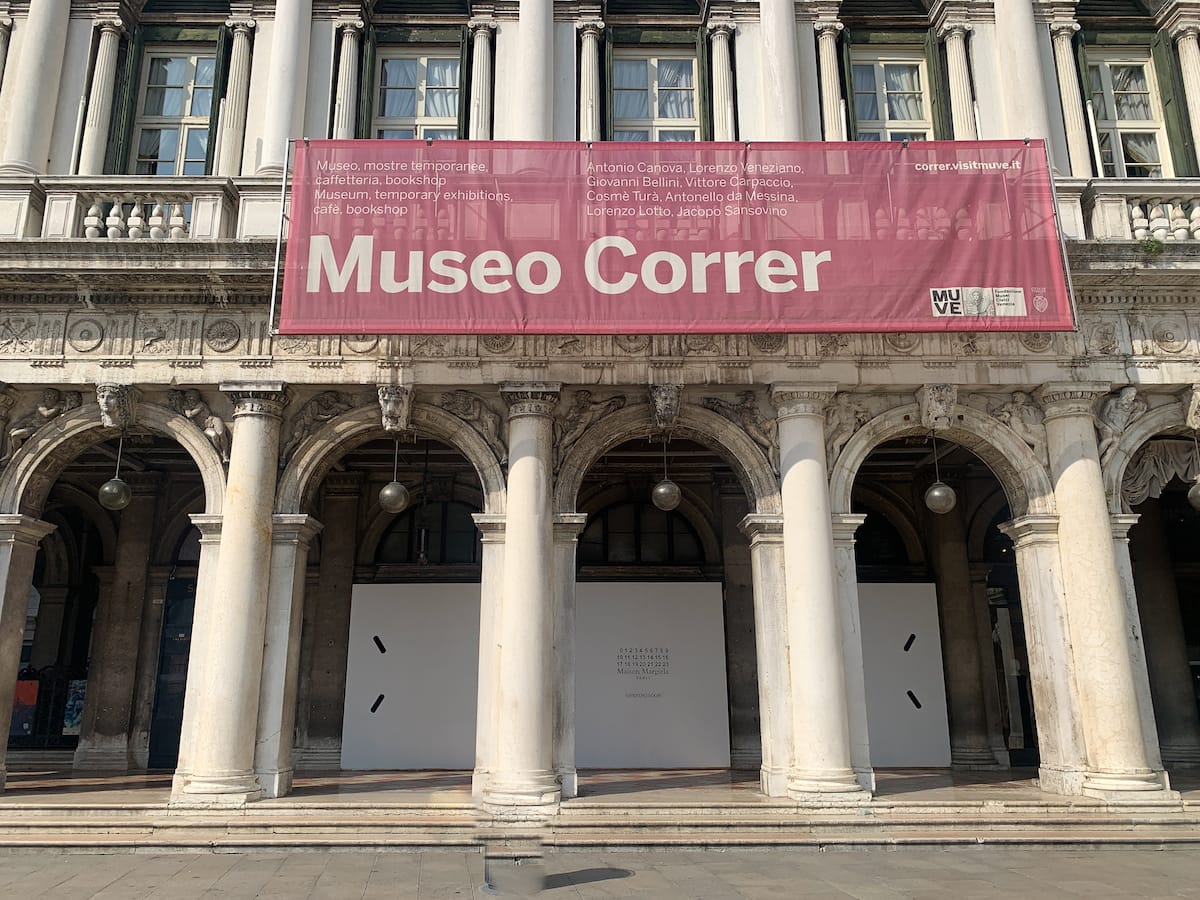
Since 1922, the Museo Correr has been located on St Mark’s Square, in the Napoleonic Wing of the Procuratie Nuove.
Napoleon chose the Procuratie Nuove as his palace in Venice in 1807, renovating and extending it, including commissioning the Napoleonic Wing. However, it was only completed later under Austrian Habsburg rule, serving as their residence when in Venice, and later as the Venetian residence of the King of Italy. Over the centuries, these rulers successively used the space, leaving a rich historical imprint.
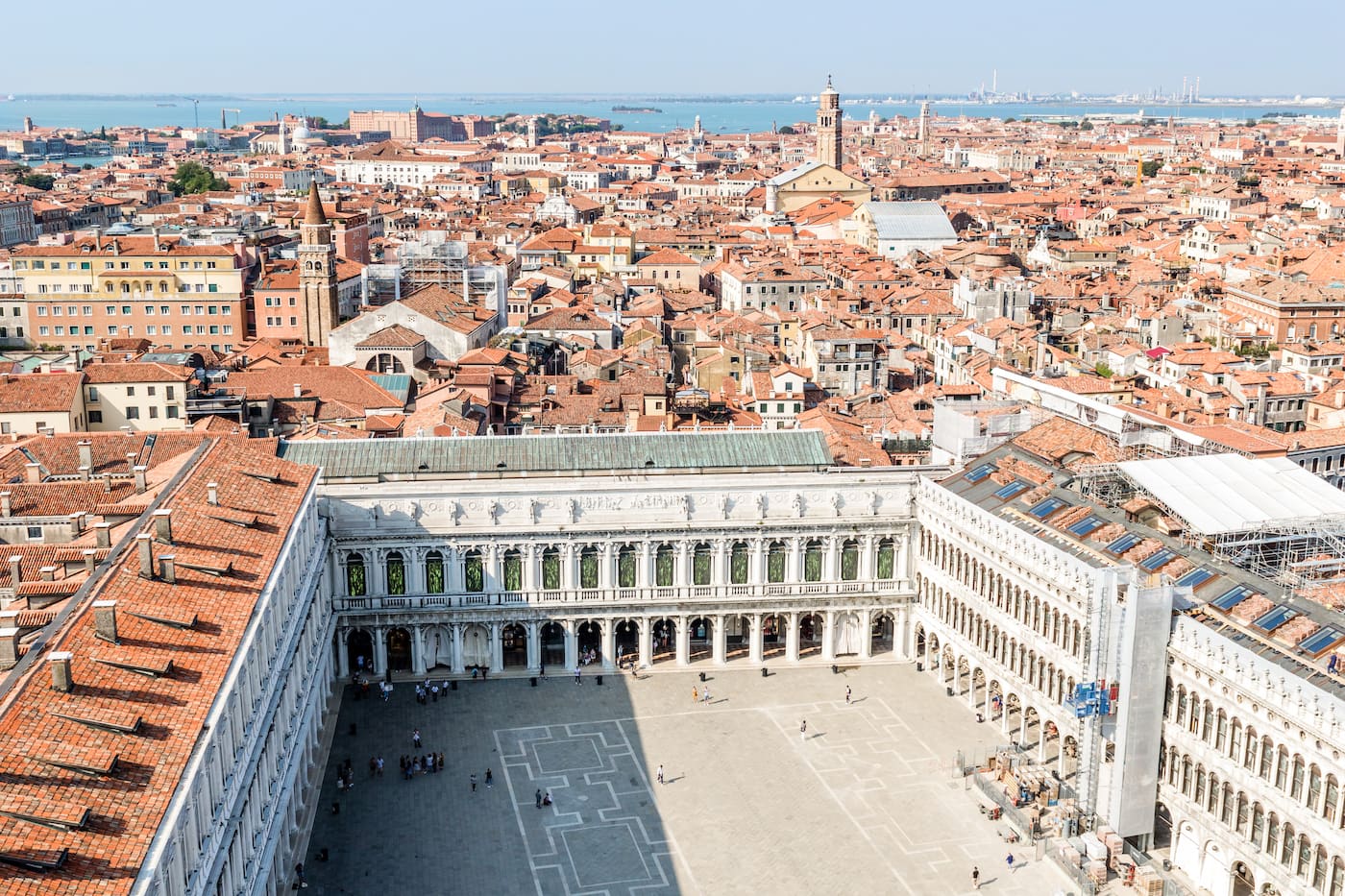
The Napoleonic Wing connects the Nuove and Vecchie Procuratie, surrounding much of St Mark’s Square. Today, the Archaeological Museum also occupies part of this complex.
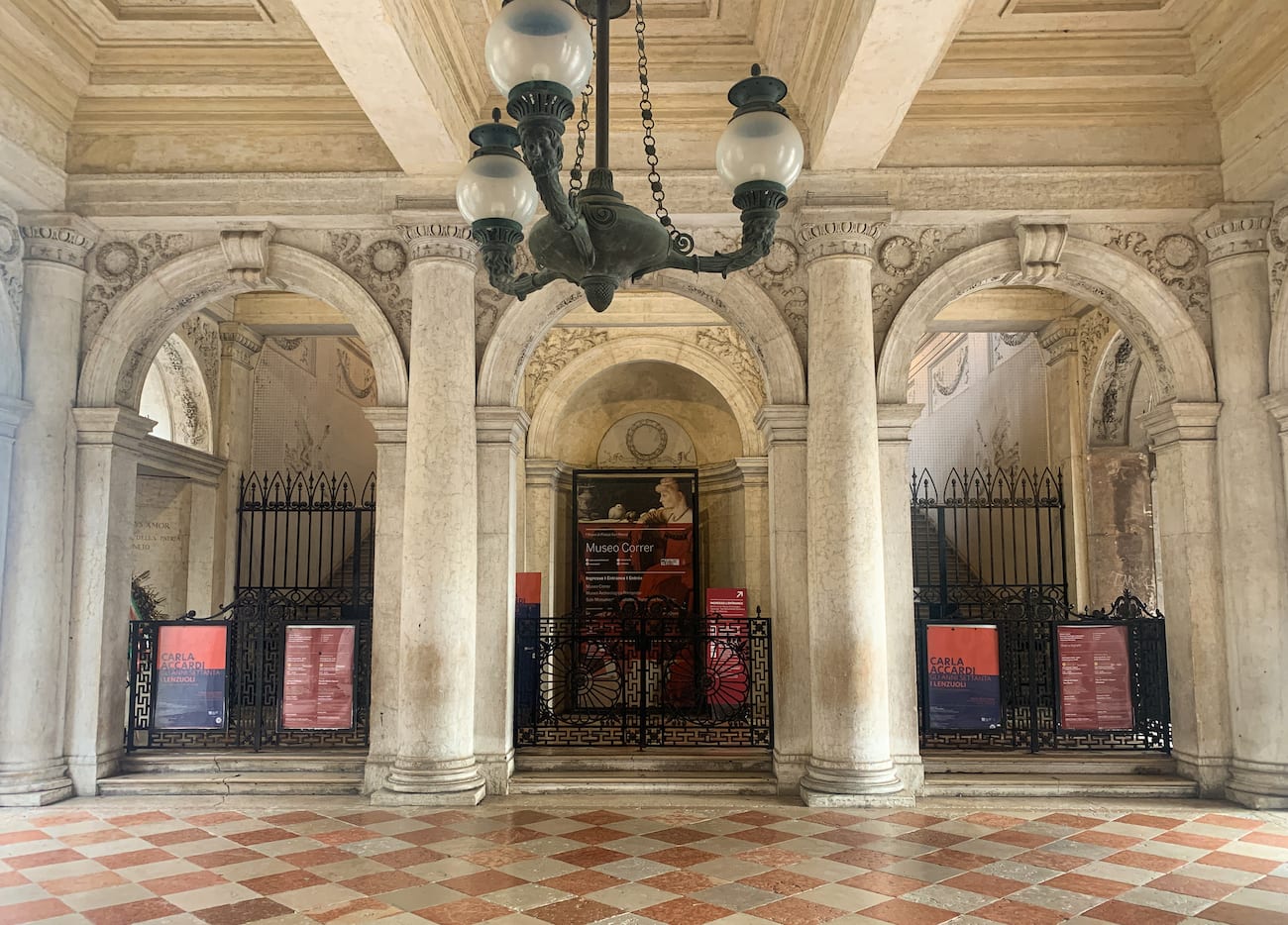
The wing was designed by architects Giovanni Antonio Antolini, Giuseppe Soli, and Lorenzo Santi. Expect a monumental portico, a grand staircase, and an opulent ballroom. Santi also designed the Giardini Reali, the royal gardens, ensuring the palace’s views of the Grand Canal remained unobstructed.
The interiors were decorated by Giuseppe Borsato, influenced by the Empire and Biedermeier styles. The ceiling fresco of the main staircase, The Glory of Neptune, was painted by Sebastiano Santi in 1837–38.
The museum is named after Teodoro Correr (1750–1830), a Venetian who donated his collection of books, manuscripts, paintings, and decorative arts to the city.
Text and image rights: © Céline Mülich, 2023–2026
other
Highlights nearby

Teatro la Fenice
find out more
Giardini Reali
find out more
St. Mark's Basilica
find out more
St. Mark's Tower
find out more