
Giardini Reali
Giardini Reali
Giardini Reali Venice
The Royal Gardens of Venice
Hidden just behind St Mark’s Square, tucked between the Archaeological Museum and the Biblioteca Nazionale Marciana, lies a small green oasis. You catch only a glimpse of it as you walk towards the Bacino di San Marco landing stage—provided you ignore the gondolas on your left and look instead to the right. There you’ll spot a small wooden bridge and a gate leading into a… garden.

My Rating:
The Positives:
A quiet retreat – so close to the action, yet so secluded. Enjoy the shade and the peace.
The Negatives:
Nothing really, but it's not a major tourist attraction either. And it's not exactly "royal" here. Just a place to take a breather.
Info:
The ferries and water taxis dock right here at the San Marco Pier. You'll then automatically walk past the garden, which is located behind all the souvenir shops.
Last Modified: 23.04.2026 | Céline
Giardini Reali
Ticket
The details
at a glance

Opening Hours
15 April to 15 October:
Wednesday to Sunday, 9.30 – 19.00 h
16 October to 14 April:
Wednesday to Sunday, 9.00 – 17.00 h
Closed: Monday and Tuesday
Public Holidays: December 25 and 31, January 1, last Sunday of Carnival, Easter Sunday, Holy Saturday (third Saturday in July): closed


Information
Groups of 10 or more people by reservation only.
No picnics or alcoholic beverages.
Trampling on flowerbeds, sitting on the ground, picking flowers or fruit, and feeding birds are prohibited.
No playing ball, riding scooters, digging holes, or throwing stones. Do not attach padlocks or other objects to the gate or in the garden.
Litter must be disposed of properly, and smoking is permitted only in the area opposite the main entrance.


Guided Tours
A guided tour accompanied by staff from the Venice Gardens Foundation can be booked.
show more

Giardini Reali
Photo Gallery

What is there
to see?
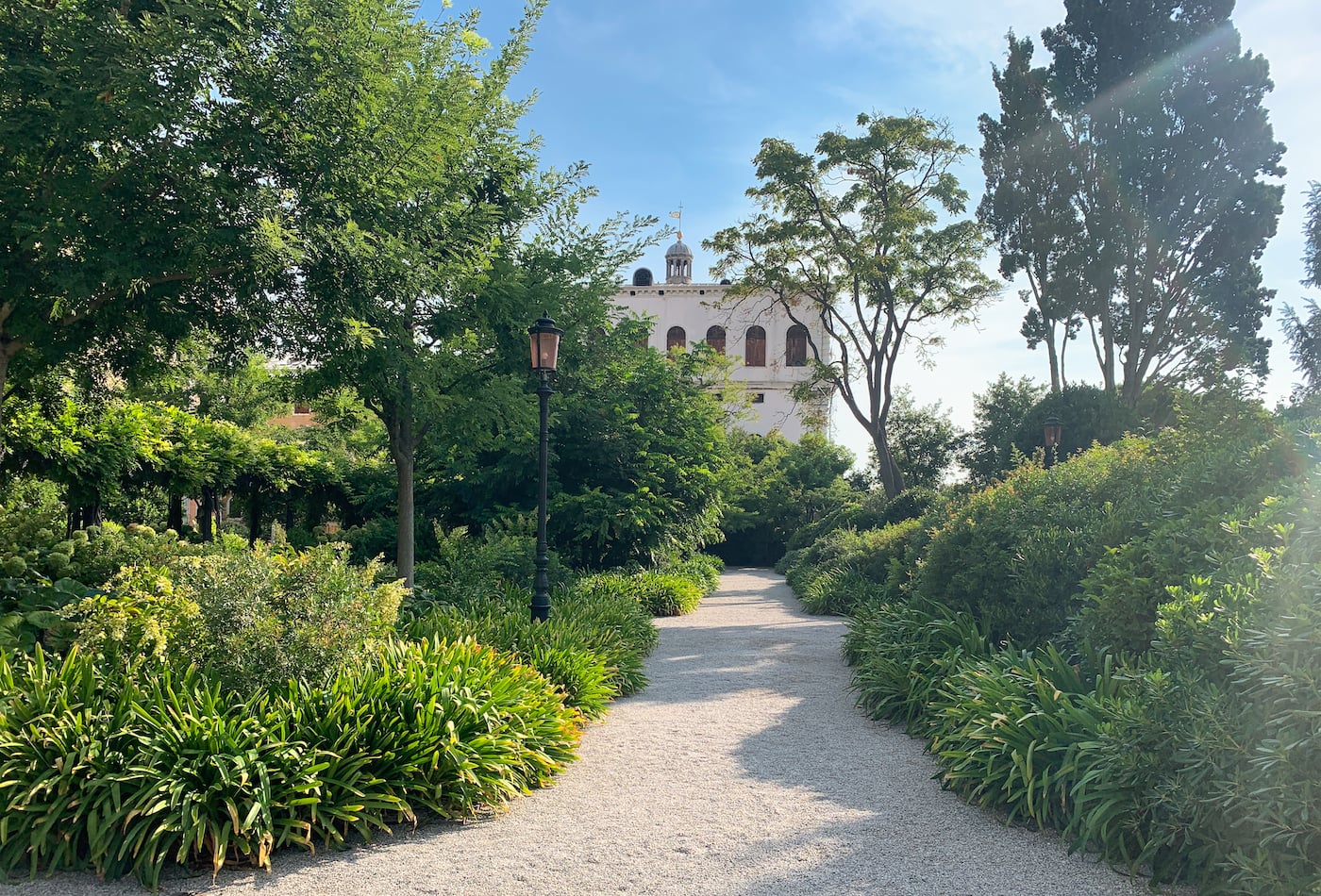
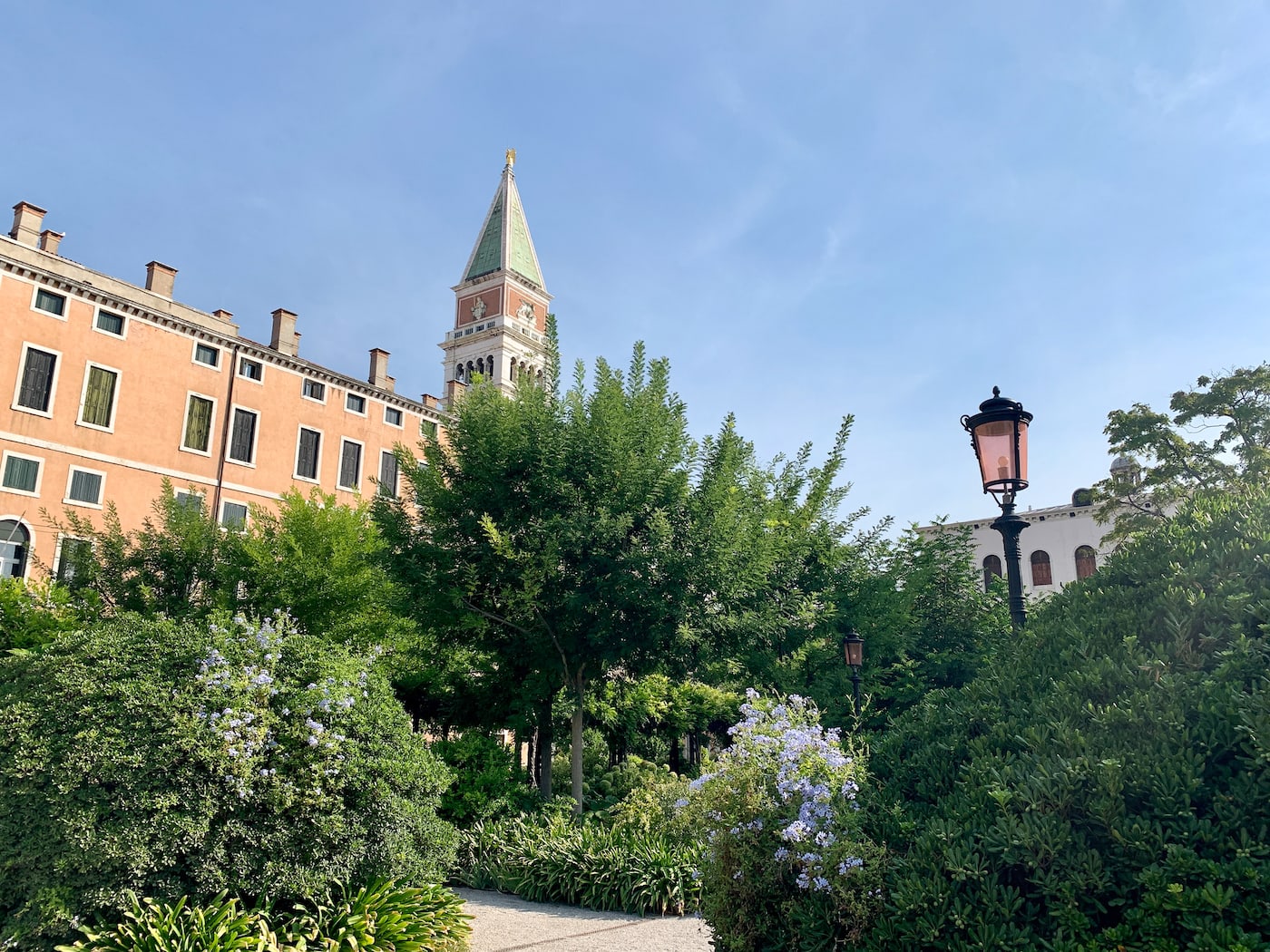
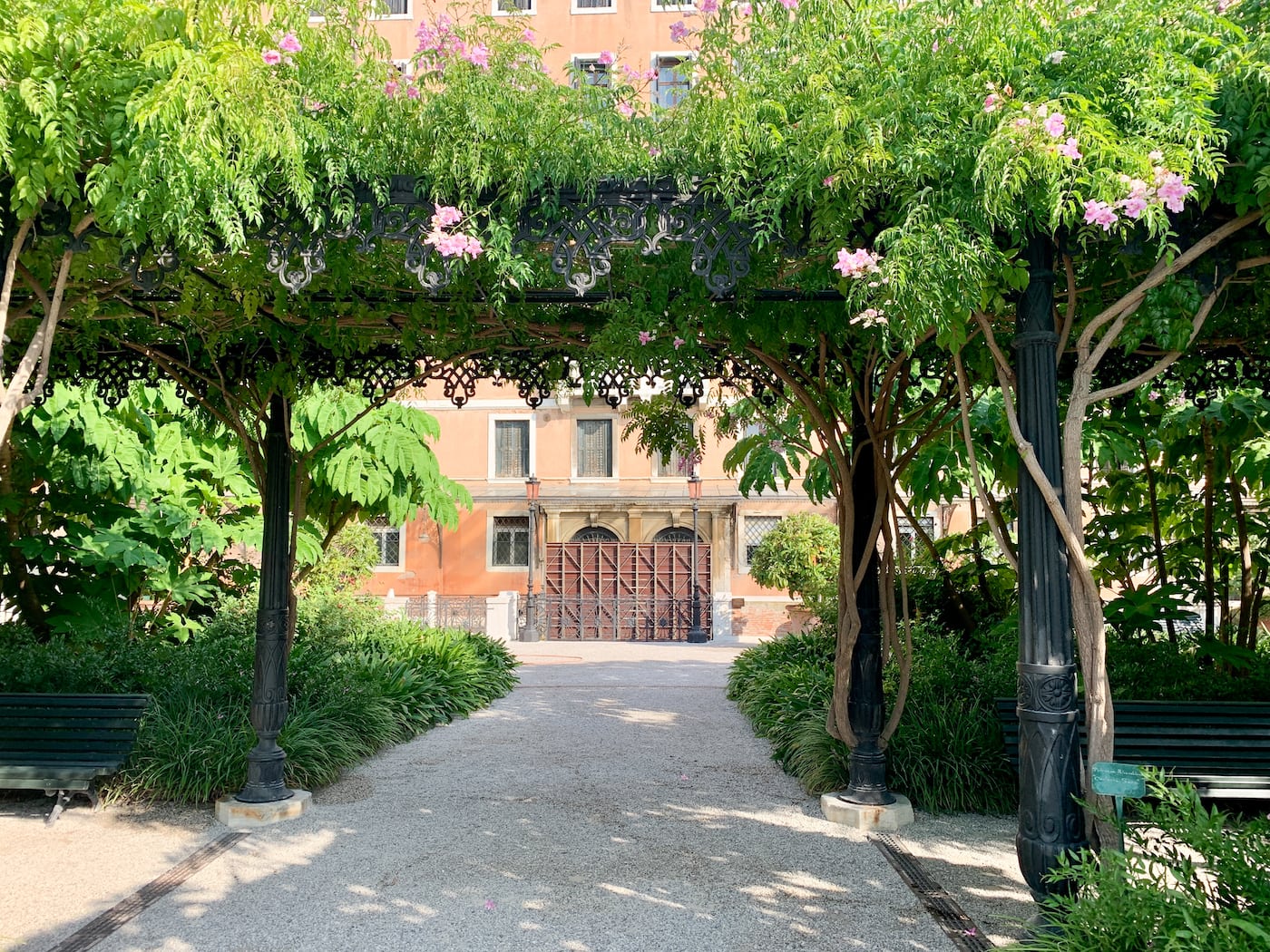
This is not a lawn for children to run wild on — though they will still enjoy it. Along neatly laid paths you can wander past beds of flowers and shrubs, discovering a surprisingly rich sampling of Venetian flora.
Depending on the season, different plants come into bloom. In summer, the raised flowerbed provides welcome shade; in winter, the numerous benches offer a peaceful spot to catch the sun.
The garden is bordered by water on three sides; the fourth side leads to the San Marco ferry landing, lined with souvenir stalls.
The Lorenzo Santi pavilion once belonged to the gardens. In summer it served as a retreat for the court, and in winter as a greenhouse. Today it functions as an information point for visitors.
Giardini Reali
A bit of History
Once again it was Napoleon who set events in motion — this time not a war, but the creation of a palace and its gardens.
In January 1807 he decreed that his Venetian palace should be established in the Procuratie Nuove (today the Archaeological Museum). The Procuratie — Venice’s medieval administrative buildings — flank St Mark’s Square, with the newer wing begun by Vincenzo Scamozzi (1581–99) and completed by Baldassare Longhena around 1640. After Napoleon’s conquest, these rooms became his residence.
He ordered further extensions, including the “Ala Napoleonica”, and insisted that the view of the Bacino San Marco remain unobstructed. A garden was to be created, which required the demolition of the granary and various shops previously on the site.
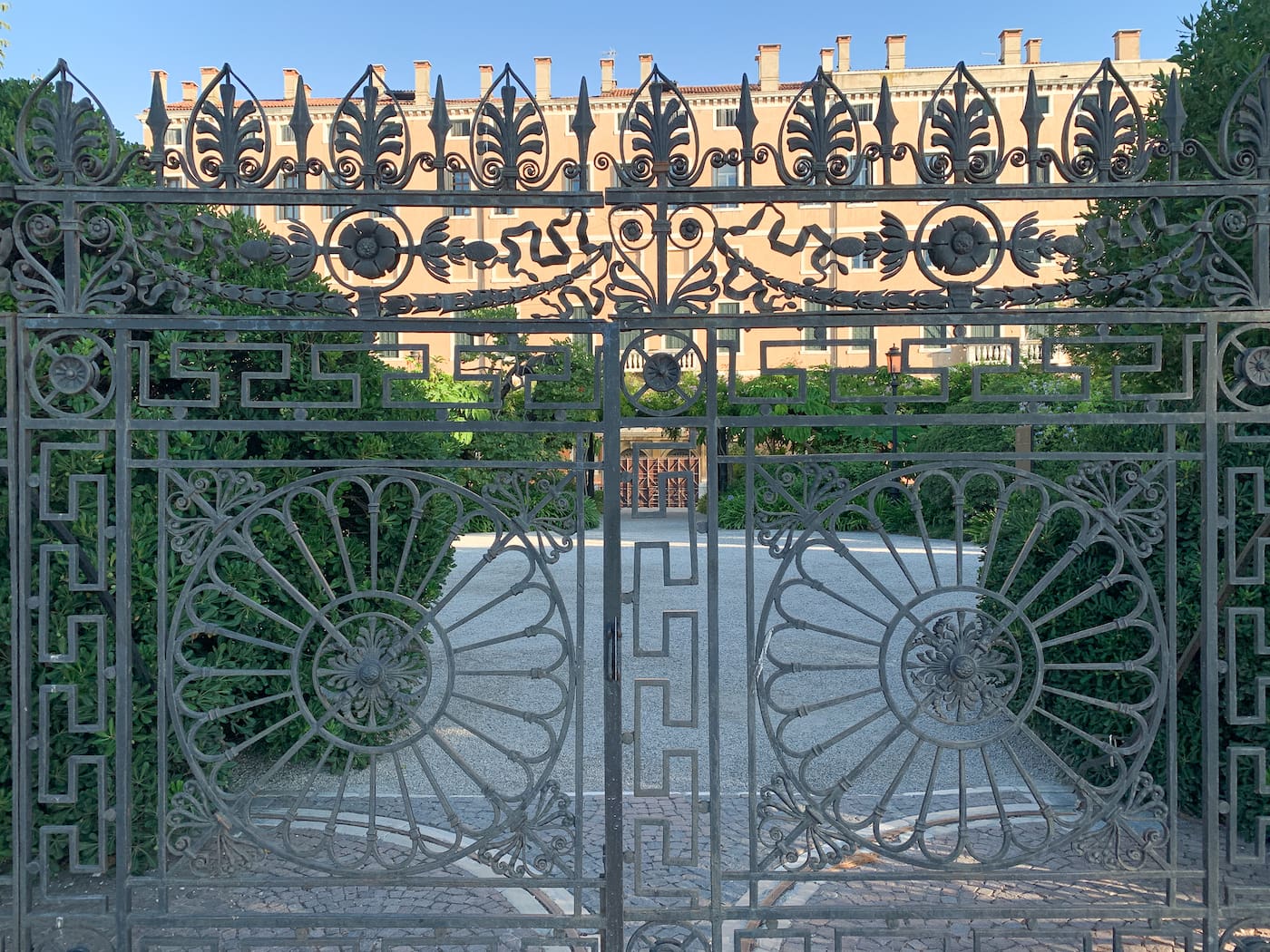
The garden was enclosed by a stone balustrade, and in 1816 a handsome iron gate was added facing the Piazzetta San Marco. Architect Lorenzo Santi also designed the layout we still recognise today: geometric paths and parterres in the Italian style, combined with two small English-style groves. Citrus trees, flowering plants and ornamental shrubs were planted from the outset.
Although mid-19th-century tastes later softened the geometry with curving paths, the original formal layout was restored in 1939–40.
In 1857 Emperor Franz Joseph from Austria returned the passage to the ferry landing to the city — an attempt to regain public favour after the turmoil of the 1848–49 revolution. Empress Sisi, however, revoked this decision in 1861 for reasons now unclear. With the arrival of the House of Savoy in 1866, the passage was once again opened to the public, and remains so today.
Since 2014, the Venice Gardens Foundation has overseen the restoration and maintenance of the gardens.
A small note: the Foundation states that photos may not be published without prior permission — hence the limited selection here (and this should stay between us 😉).
Text and image rights: © Céline Mülich, 2023 – 2026
other
relaxing sights

Island of San Giorgio Maggiore
find out more
Island of Burano
find out more
Gardens & Parks of Venice
find out more