
NIEUWE KERK
NIEUWE KERK
A CHURCH with ART
NIEUWE KERK
The Nieuwe Kerk in Amsterdam is not just a “beautiful” church. Exhibitions on art, photography and culture also take place here. An annual highlight is the “World Press Photo” exhibition!

My Rating:
The positives:
The "World Press Photo" exhibition is a hit, plus there are many historical elements such as the organ...
The negatives:
... the church itself is - in comparison to the Sagrada Familia or Notre-Dame - not such a big aha experience.
Last Modified: 20.03.2026 | Céline
NIEUWE KERK
Tickets
The detailsa
at a glance


I Amsterdam Card
Free admission to the Nieuwe Kerk with the I Amsterdam Card!
Reservation of a timeslot is required.
-> More information about the I Amsterdam Card


Nieuwe Kerk
Photo Gallery
What is there
to see?
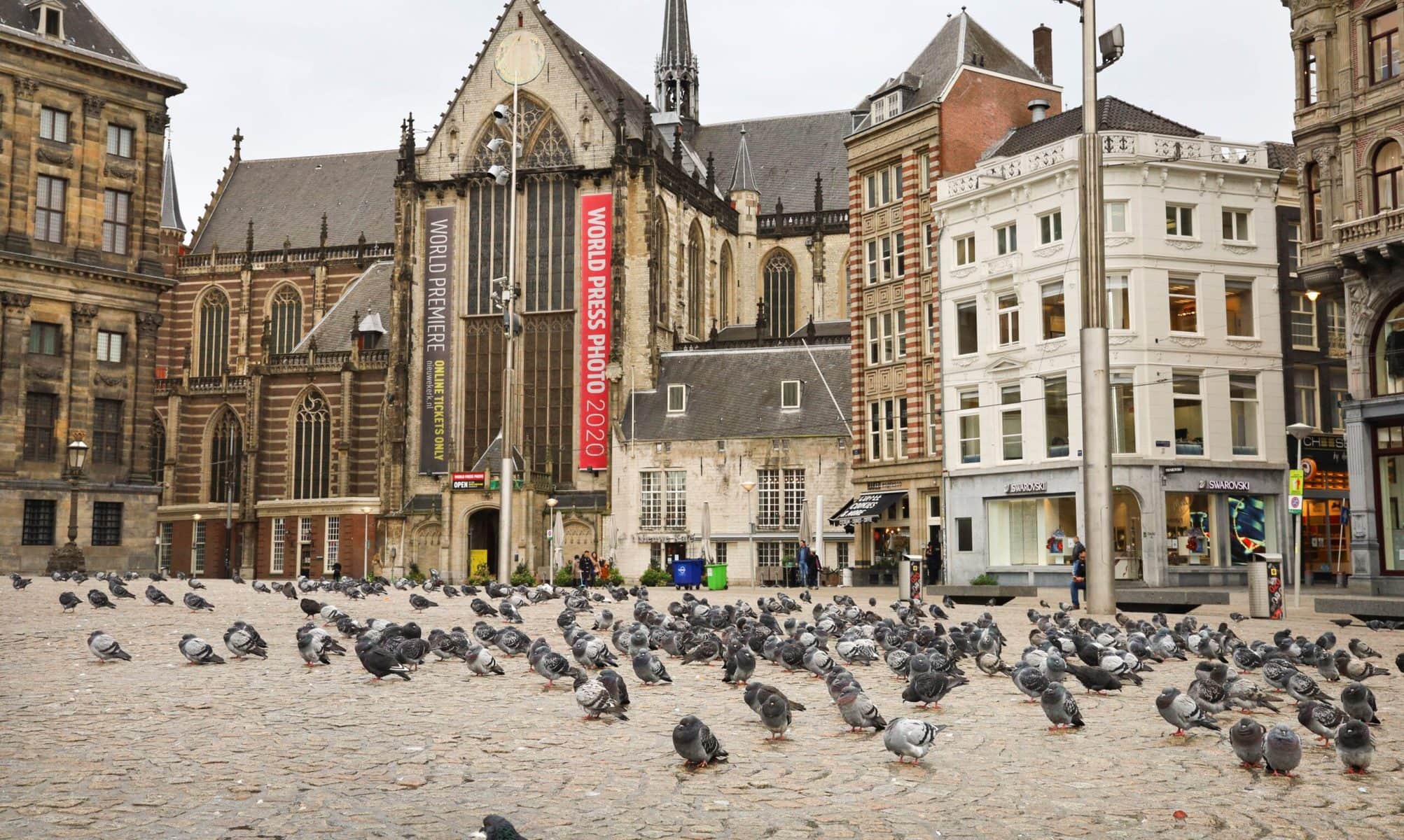
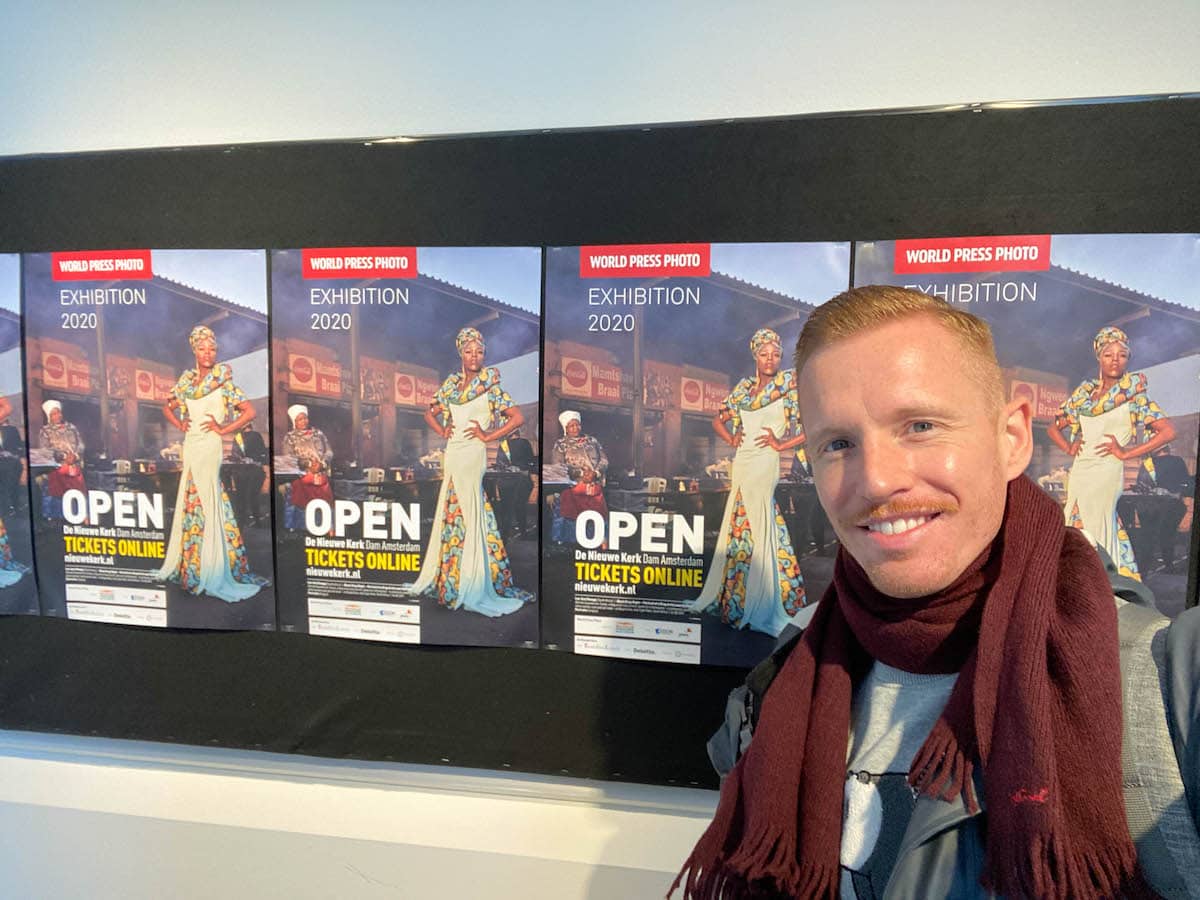
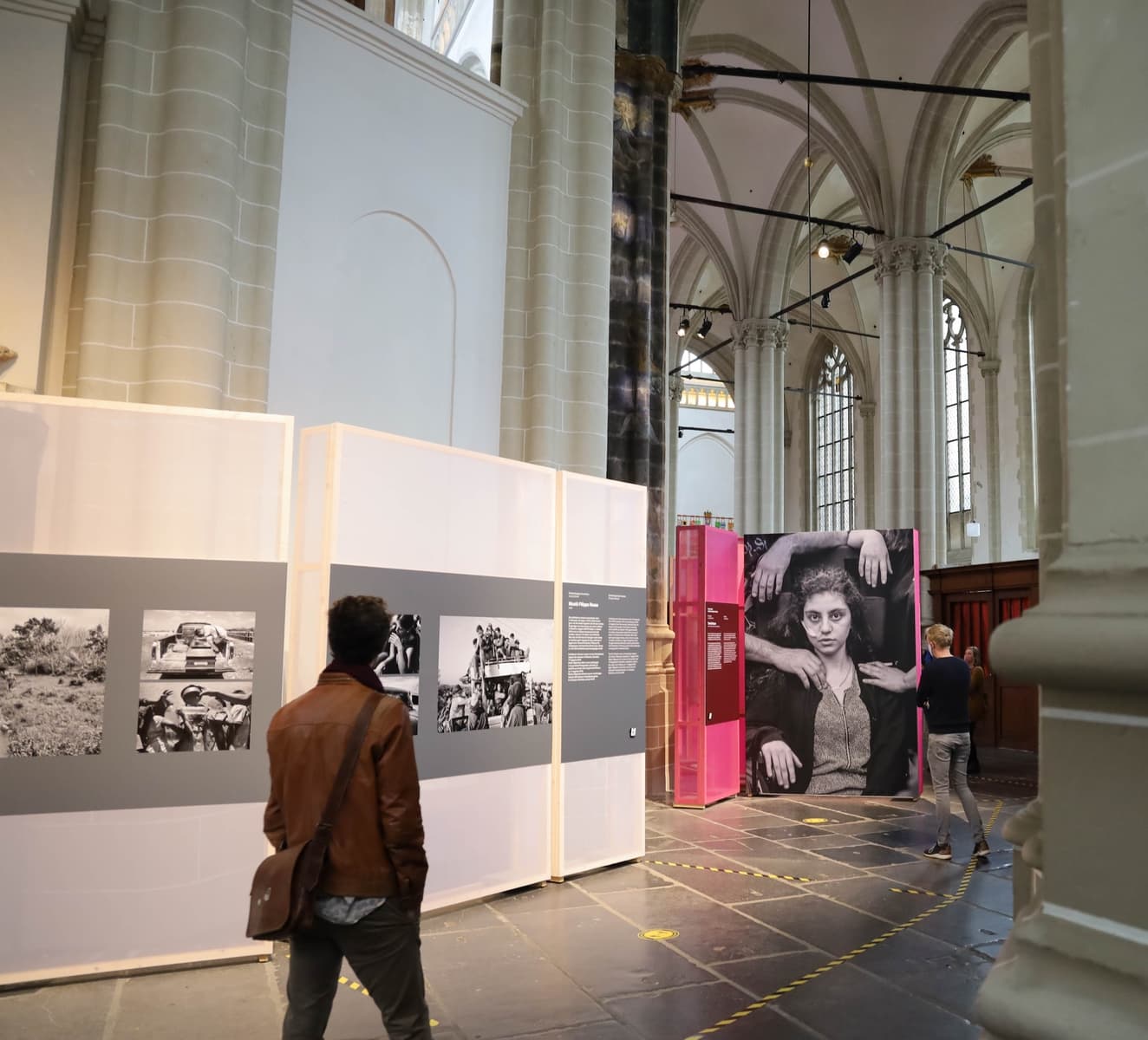
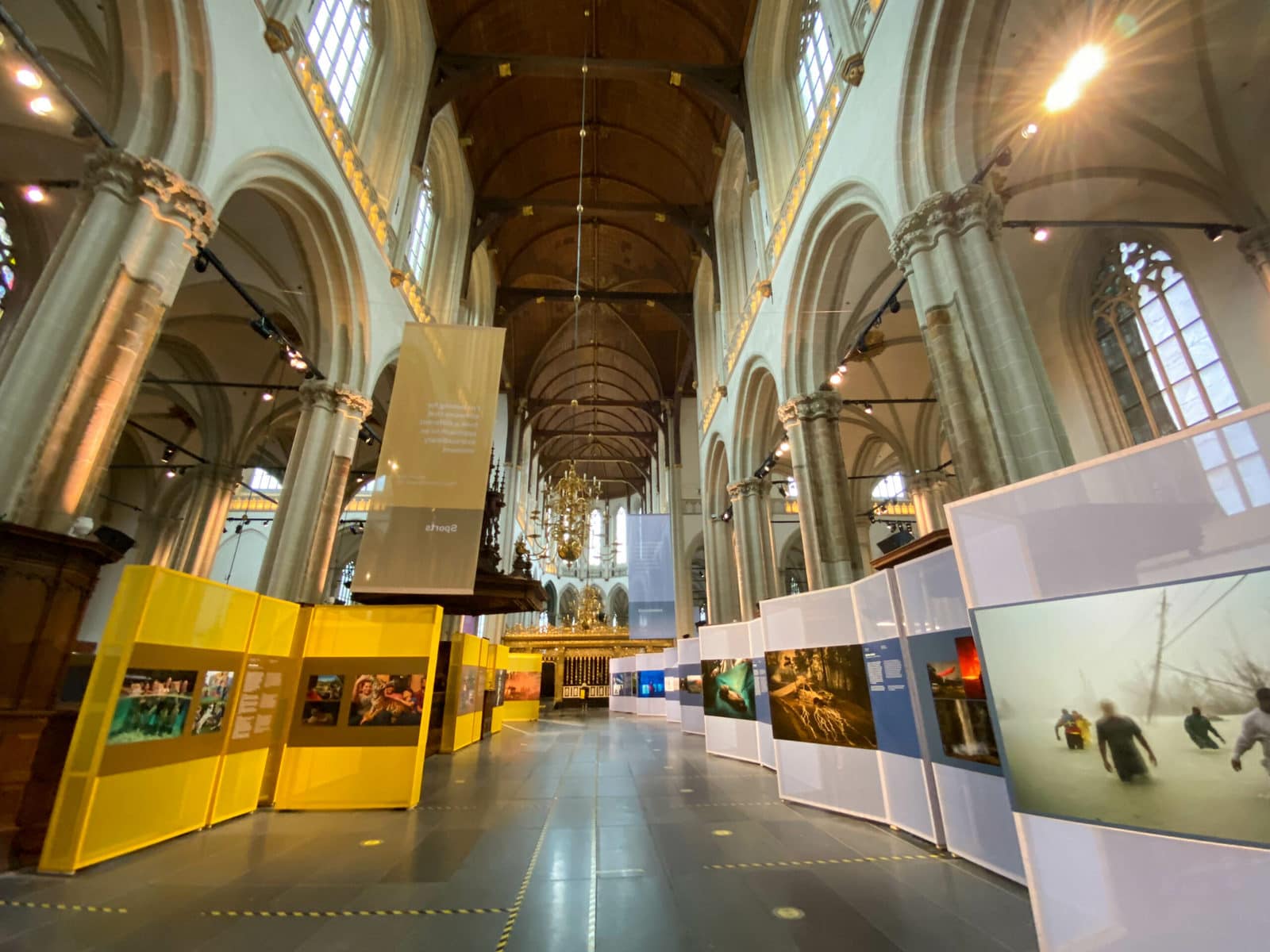
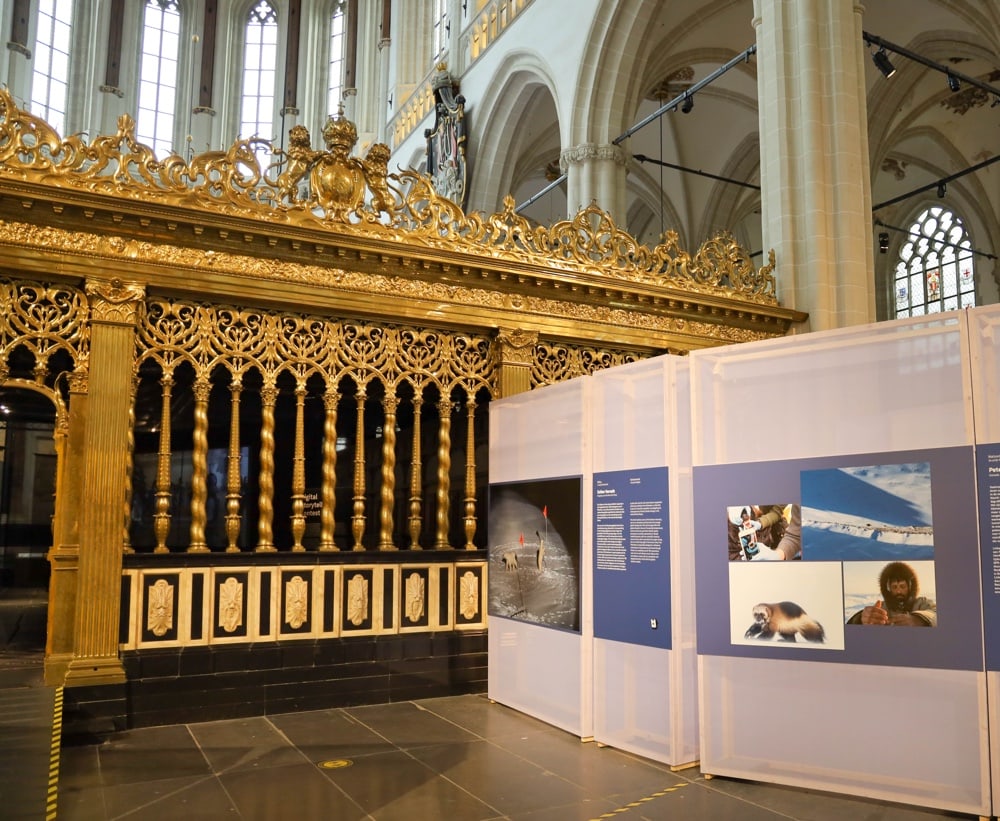
Right next to the Royal Palace Amsterdam on Dam Square is the Nieuwe Kerk (New Church). It is especially renowned for the exhibitions regularly held within its sacred halls, which mainly focus on art, photography, and culture. During our visit, we were able to admire the world-famous World Press Photo exhibition. These exhibitions are also hosted regularly in other European cities, such as the CCCB in Barcelona or Mattatoio in Rome.
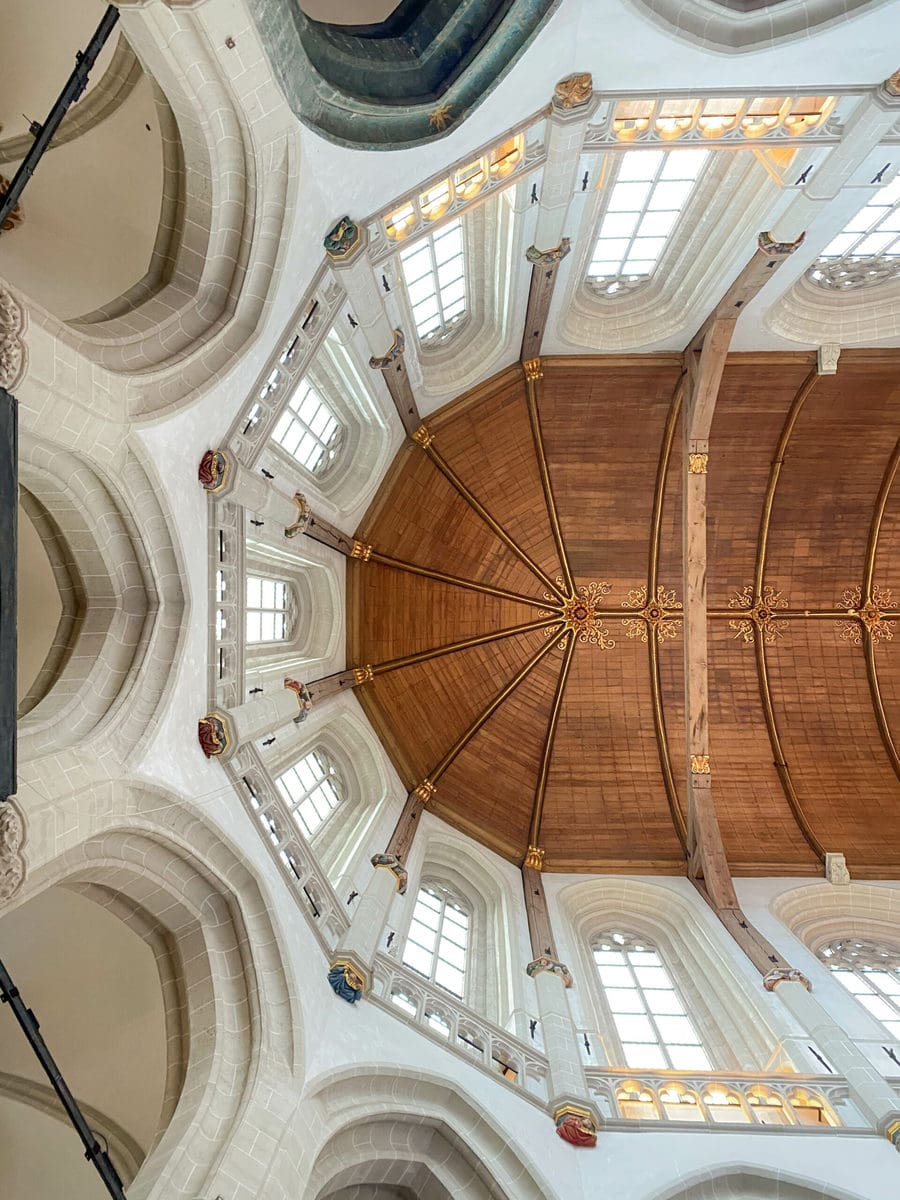
Regardless of the current exhibition, the combination of art and photography alongside the church’s architecture often creates a remarkable harmony.
Beyond the exhibitions, the Nieuwe Kerk also offers a wealth of historical details.
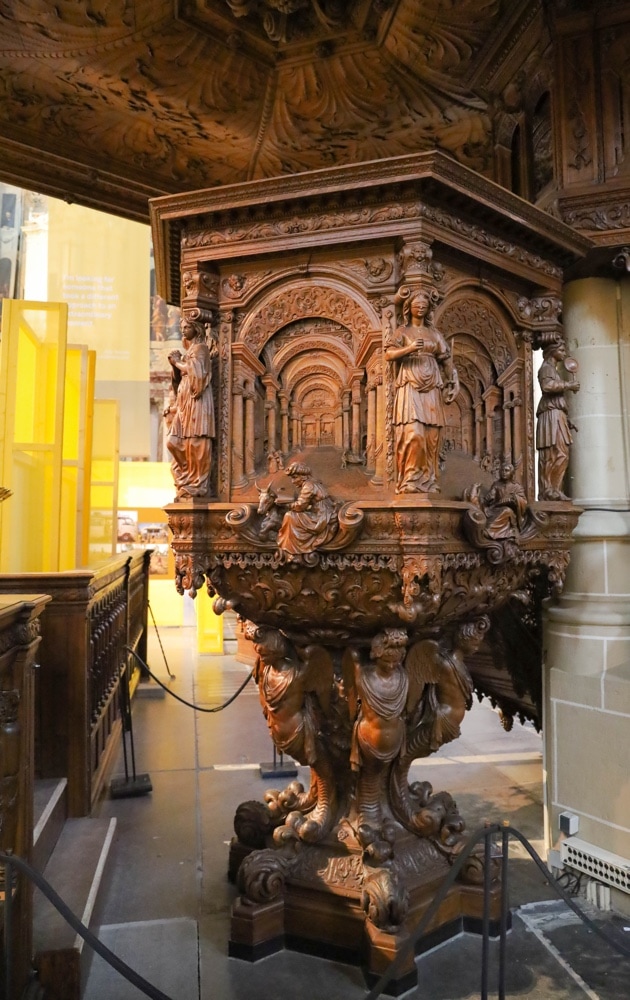
For example, the pulpit in front of which, since 1814, the inaugurations of the Dutch monarchs have taken place. It was here that the Prince of Orange and Máxima Zorreguieta took their vows in 2002.
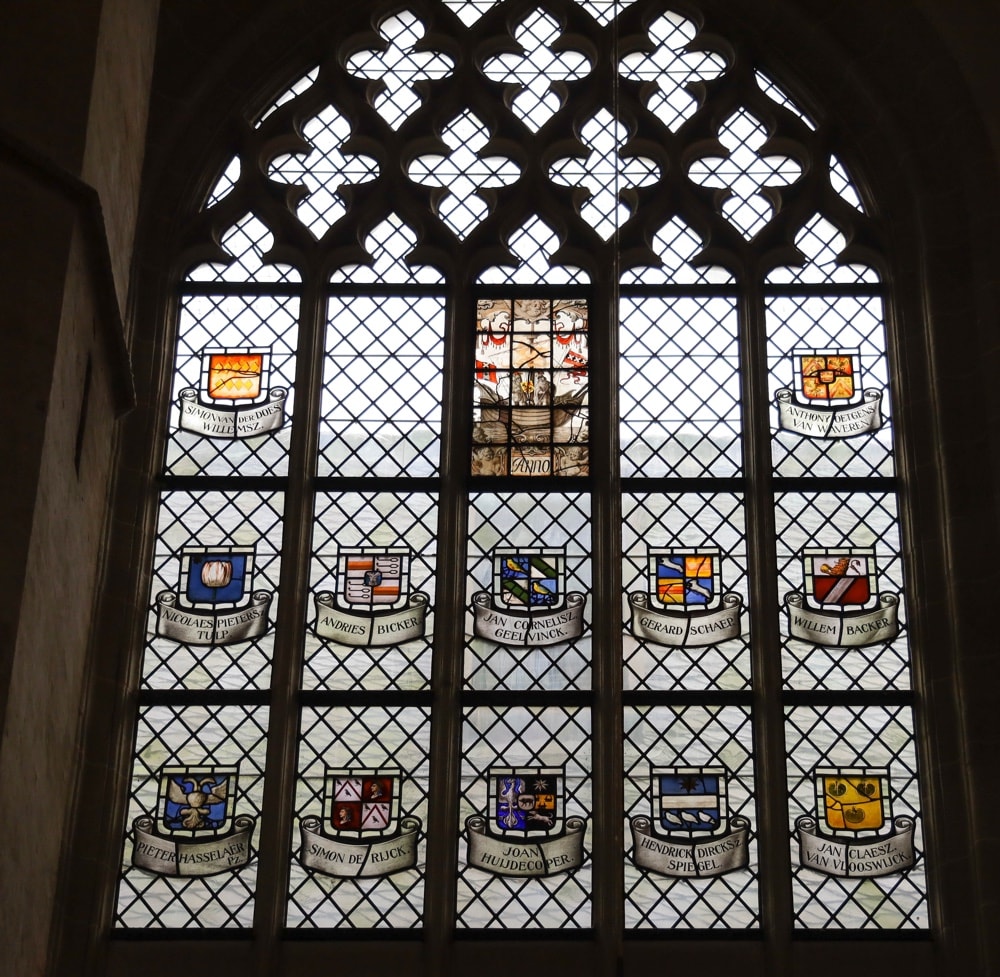
The oldest part of the church is the choir and the surrounding chapels, originally built in the Middle Ages for patron saints. When the church became Protestant in 1578, the chapels were closed and repurposed — for example, as storage rooms or a kitchen for the sexton. Two of the chapel windows display 36 family coats of arms, including that of the family of Frans Banning Cocq, the commissioner and central figure in The Night Watch by Rembrandt. He, however, is buried in the Oude Kerk.
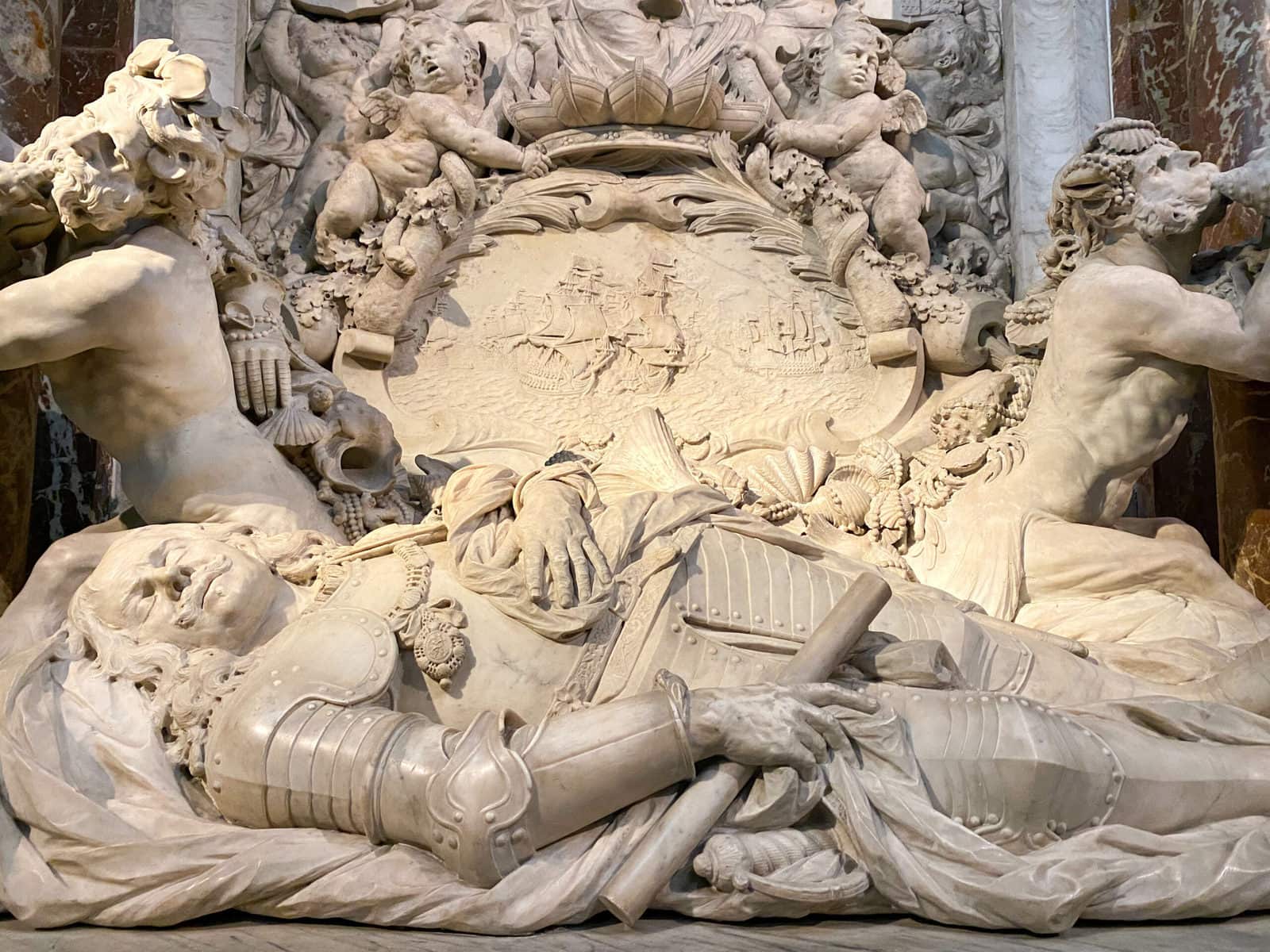
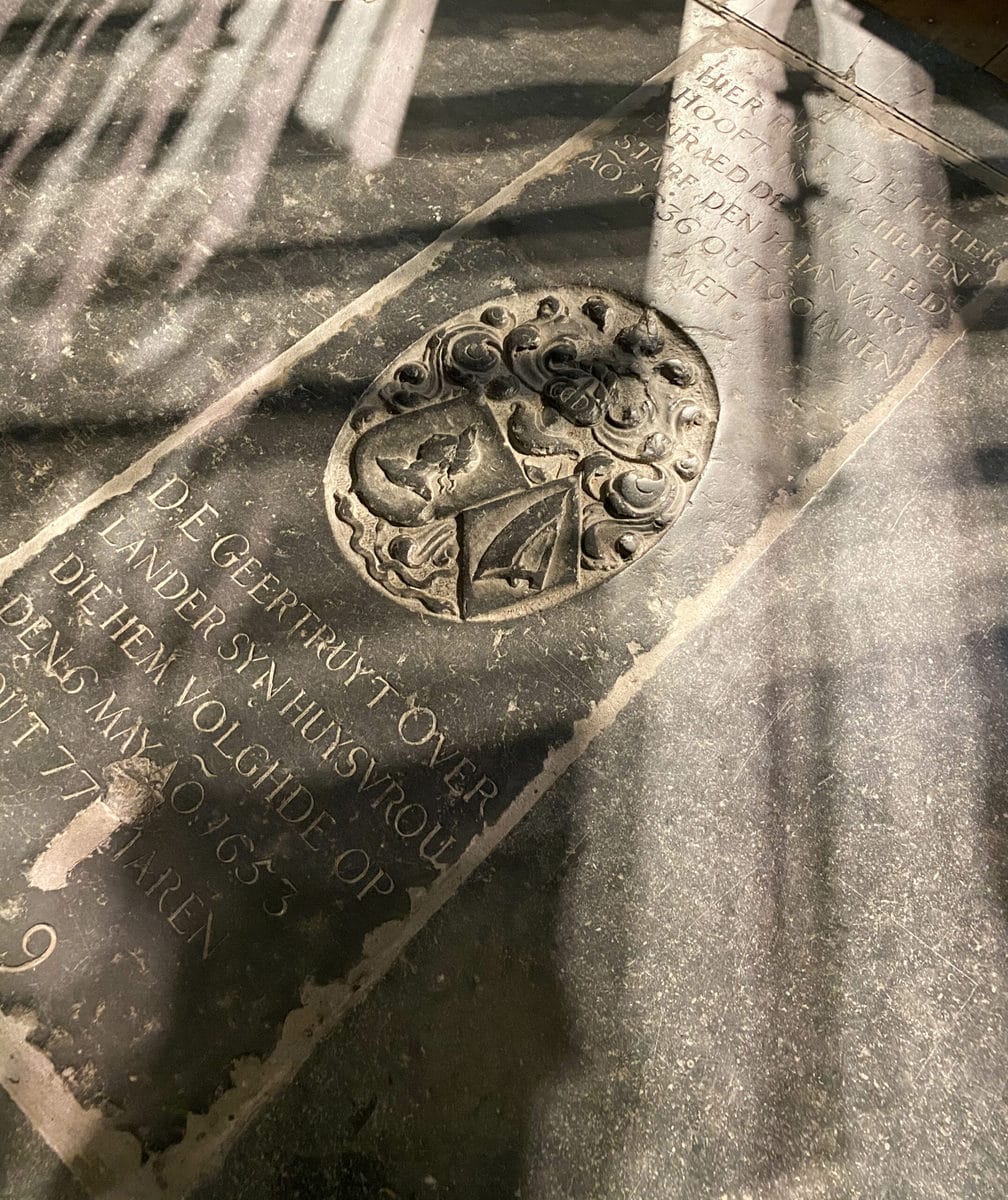
The Nieuwe Kerk contains around 10,000 graves — the church floor is covered with tombstones! Many belong to sailors, including Michiel de Ruyter and Jan van Galen, important figures of the Dutch Golden Age. Wealthy community members were also buried here, such as the writers and poets P.C. Hooft, Joost van den Vondel, and Isaäc da Costa, as well as the surgeon and mayor Nicolaes Tulp, whose coat of arms is also visible in the windows.
Since 1866, burials inside churches in Amsterdam have been prohibited. The last burial in the Nieuwe Kerk took place on 30 December 1865. Over time, many of the tombstones were moved or repurposed.
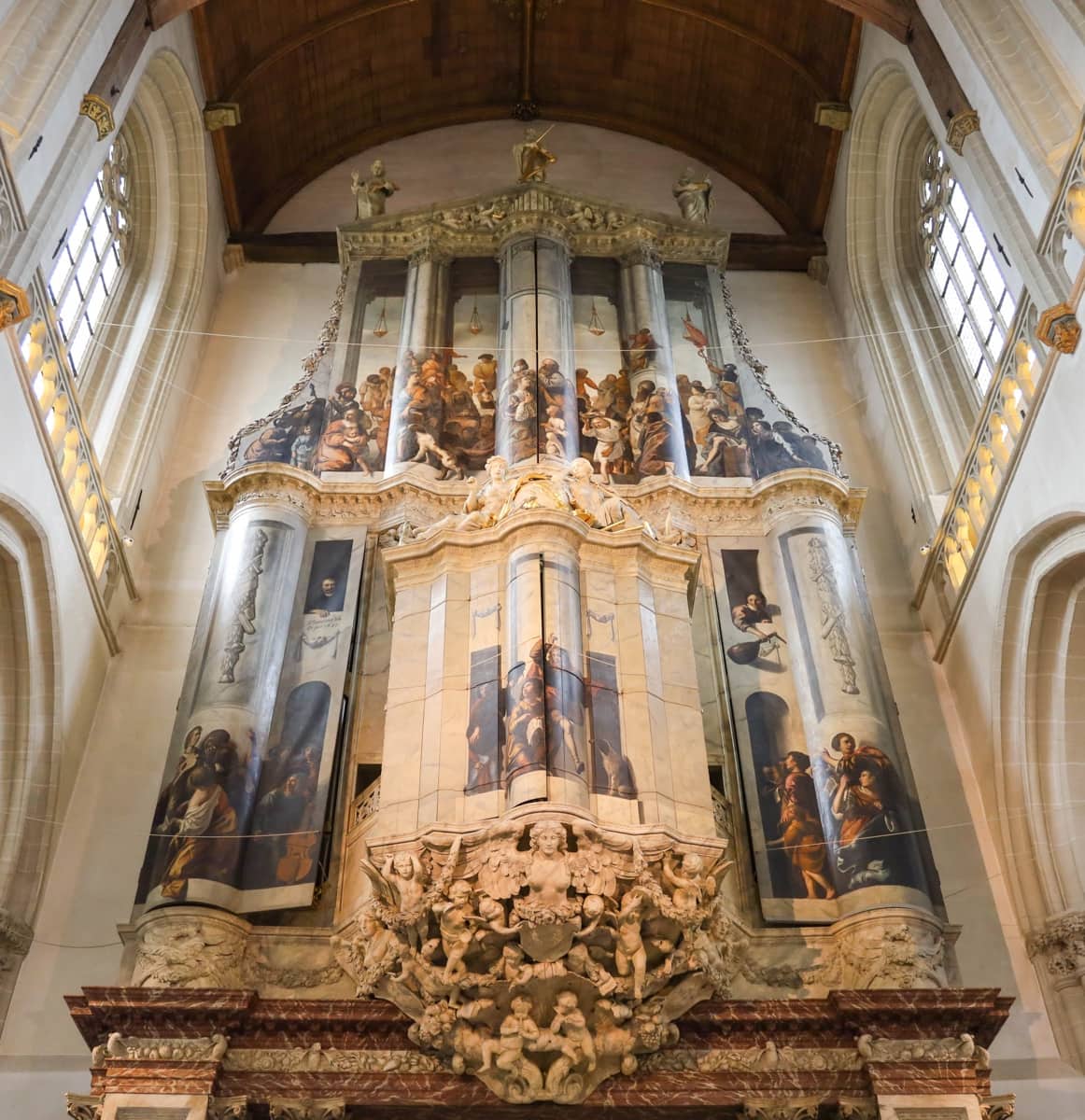
The two organs of the Nieuwe Kerk are also steeped in history. In 17th-century Netherlands, and particularly among Protestants, organs were controversial. Radical voices argued that playing them would awaken “fleshly desires” — the church was meant only for preaching! The city authorities, however, emphasised their educational value and even organised special concerts to keep people away from taverns.
In 1645, following the church’s worst fire, the current large main organ was commissioned. It occupies the entire west wall. Lavishly decorated, it almost doesn’t look like an organ at all — more like a temple! The various panels can be opened and closed. When closed, they depict scenes including King David with women singing and playing music, his anointment as king, his triumph over Goliath, and playing the harp for Saul.
The smaller of the two organs is located in a transept.
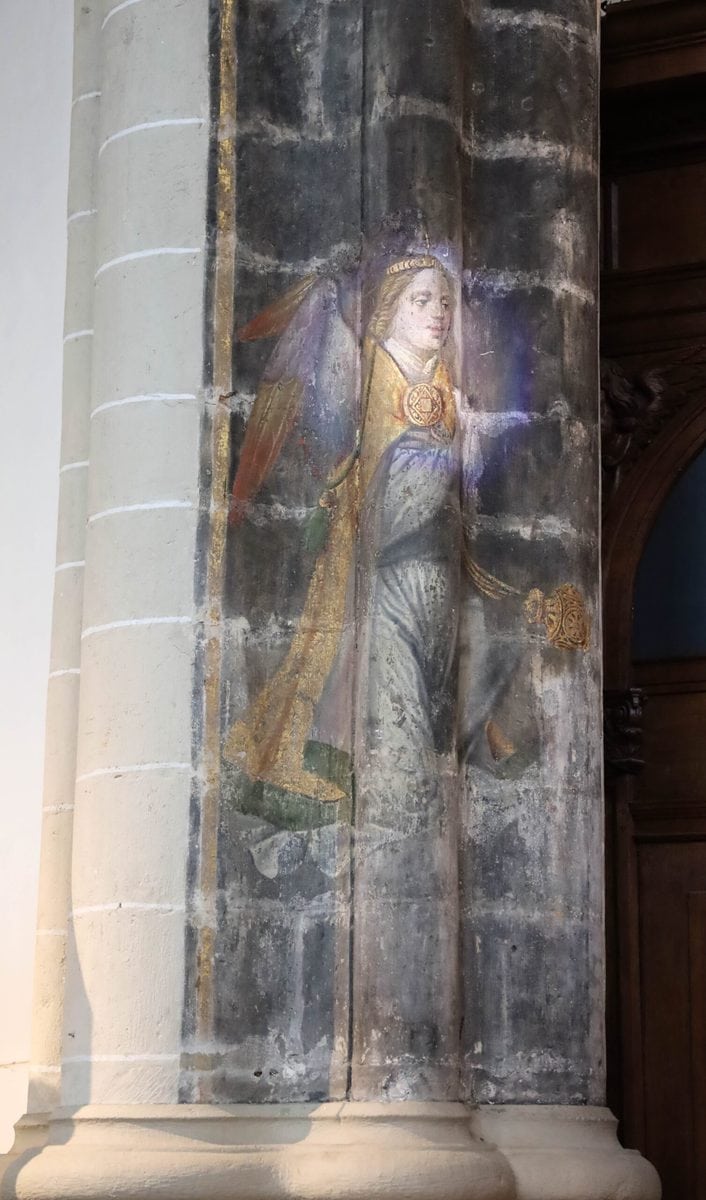
Other noteworthy features include the pulpit, the oak benches of the regents where the “men of quality” sat, the beautiful angel frescoes on the columns (sometimes covered), and the stunning stained-glass windows with a variety of motifs.
Nieuwe Kerk
A bit of History
The Nieuwe Kerk was consecrated in 1409, making it over 600 years old — certainly not as “new” as its name might suggest! However, it is still younger than the Oude Kerk (Old Church), which explains the name.
As Amsterdam grew rapidly in the Middle Ages, a second church was needed alongside the Oude Kerk to accommodate all the faithful and churchgoers. The Nieuwe Kerk was not only a place for sermons but also for burying prominent citizens, hosting concerts (as mentioned earlier), and serving as a venue for trade and other events.
Unfortunately, the church suffered several fires over the centuries. The worst occurred in 1645, leaving only charred ruins. The citizens of Amsterdam came together to rebuild the church, and since then, visitors can admire its new and exquisite features such as the organ, pulpit, and stained-glass windows. The last major restoration took place from 1959 to 1980.
Eventually, the Protestant church that owned the building could no longer afford its upkeep, so a new purpose was found: the Nieuwe Kerk became a venue for exhibitions and cultural events.
On 2 February 2002, Willem-Alexander and Máxima Zorreguieta chose the Nieuwe Kerk as the location for their wedding ceremony, a magical event watched by millions on television in the Netherlands and around the world.
Official website Nieuwe Kerk (EN): www.nieuwekerk.nl
Text and image rights: © Céline Mülich, 2021 – 2026


